7 stops in the city centre Allow half a day with visits Start: Aalborghus Castle
ONE CITY, MANY LAYERS OF HISTORY
Take the castle’s history into the city.
Aalborghus is part of a larger story. In the surrounding streets you will find a merchant’s Renaissance house, a medieval church and monastery, and architecture along the Limfjord. This walk connects them, turning a castle visit into a journey through Aalborg.
The walking times below are approximate and measured from the castle, not from the previous stop. Follow the whole route or choose the places that interest you. Indoor visits, breaks and events require extra time.
01
1539–1555 · ROYAL POWER
Aalborghus Castle
Slotspladsen 1AStart at the castle
Begin where royal and city history meet.
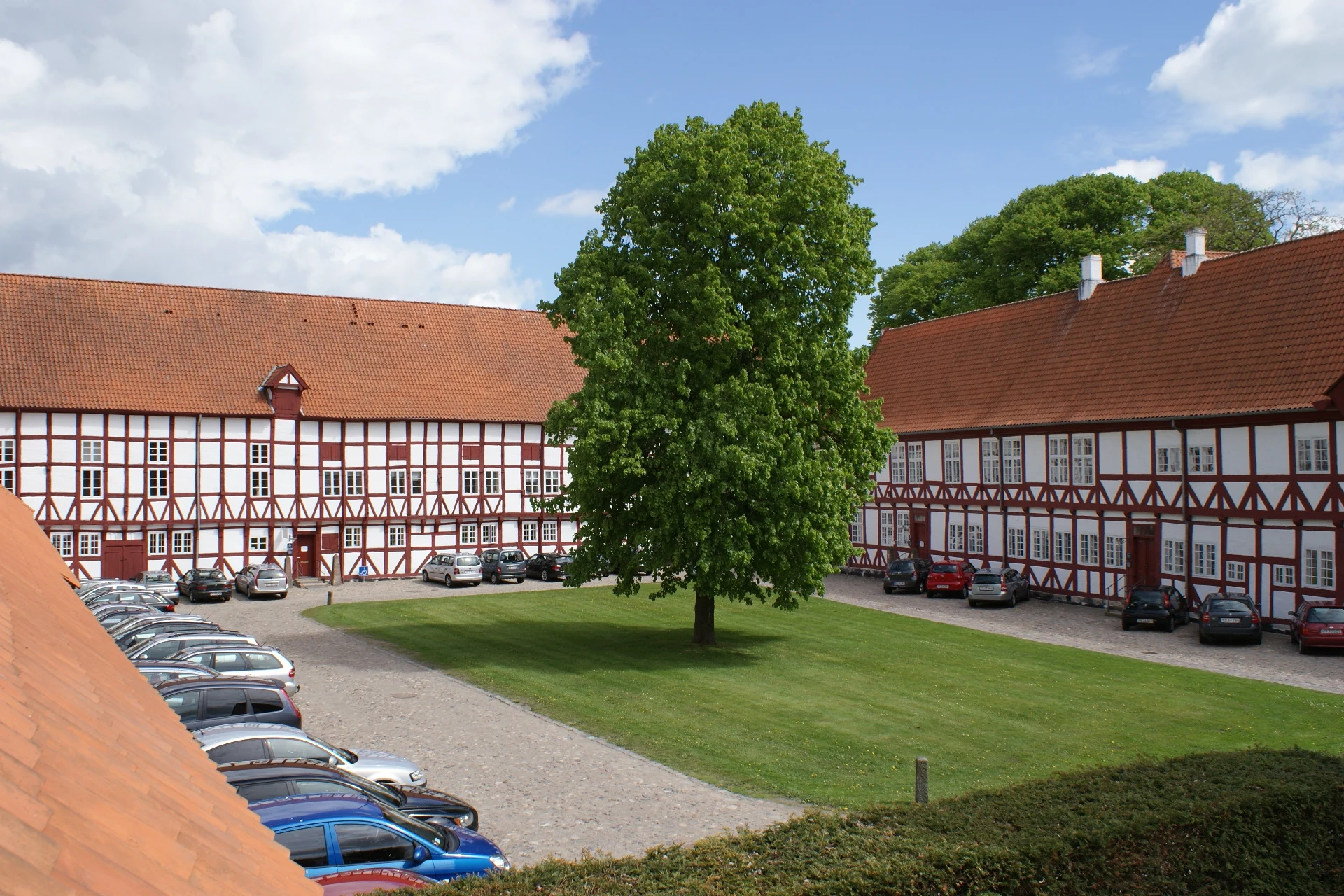
Walk through the courtyard and notice the contrast between the thick outer walls and the half-timbered façades facing inward. Christian III built Aalborghus as a fortress, but it became an administrative centre for North Jutland instead. It offers a useful starting point for understanding Aalborg: royal authority stood close to the fjord and the city’s trade.
The green ramparts and seasonally accessible underground rooms make a peaceful beginning to the walk. From here, head towards Nytorv and Østerågade, where the merchants’ city takes over.
The courtyard and grounds can be visited; the castle buildings are not open to the public.
A merchant’s ambitions, written in brick and sandstone.
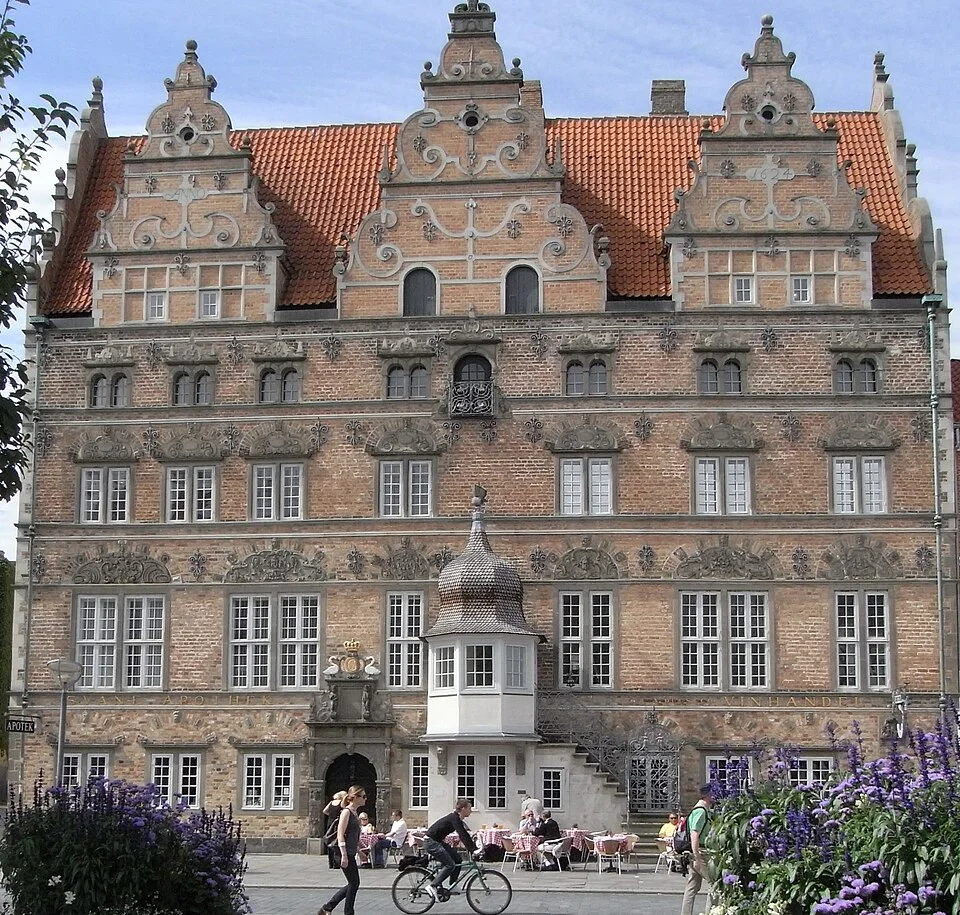
While the castle represents the king, Jens Bang’s House reveals the wealthy trading town. The merchant commissioned this five-storey house in 1624. Its decorated gables, sandstone reliefs and figures make the façade a sight in its own right.
Pause in the street and look up through the storeys. The building is a striking example of Renaissance domestic architecture and of the wealth generated by Aalborg’s trade. Compare its decorative stone façade with the castle’s exposed timber construction.
View the façade from the street. Any indoor visit requires separate access.
Klosterjordet 1 · near C.W. Obels PladsApprox. 10 min. from the castle
A living institution behind the busy city’s façades.
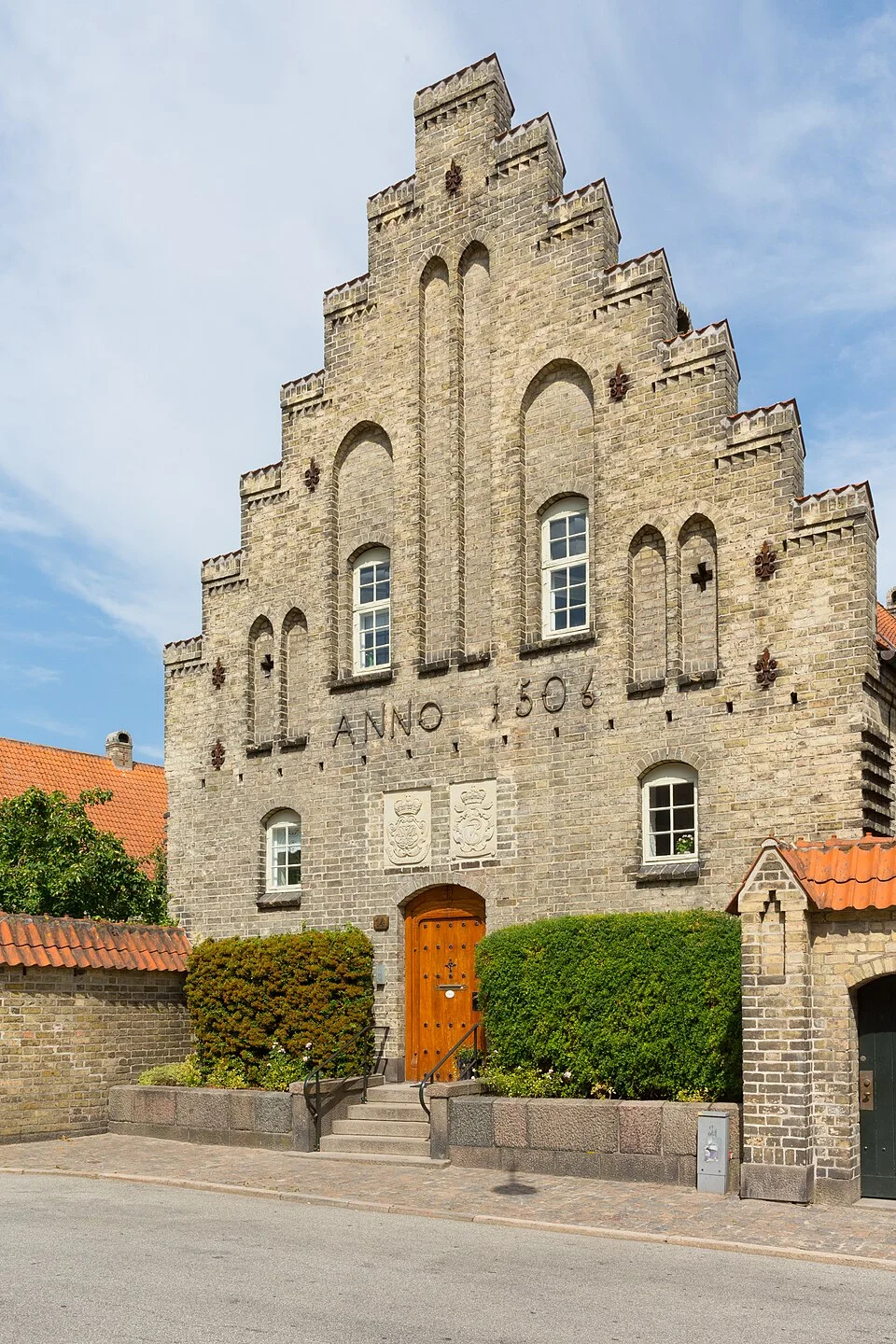
Aalborg Monastery began as a House of the Holy Spirit and hospital, founded in 1431 by Maren Hemmingsen. It later developed into a monastery. Care for the sick and vulnerable is central to its story, offering a different view of the city from the royal fortress and the merchant’s stone house.
The monastery is still inhabited and today contains rented homes and cultural activities. It is more than a historic backdrop. A guided tour can reveal stories and rooms that you would miss by viewing the buildings only from outside.
Respect the residents; consult the monastery’s own information about guided tours and access.
By Algade and GammeltorvApprox. 10 min. from the castle
The white church at the heart of the historic city.
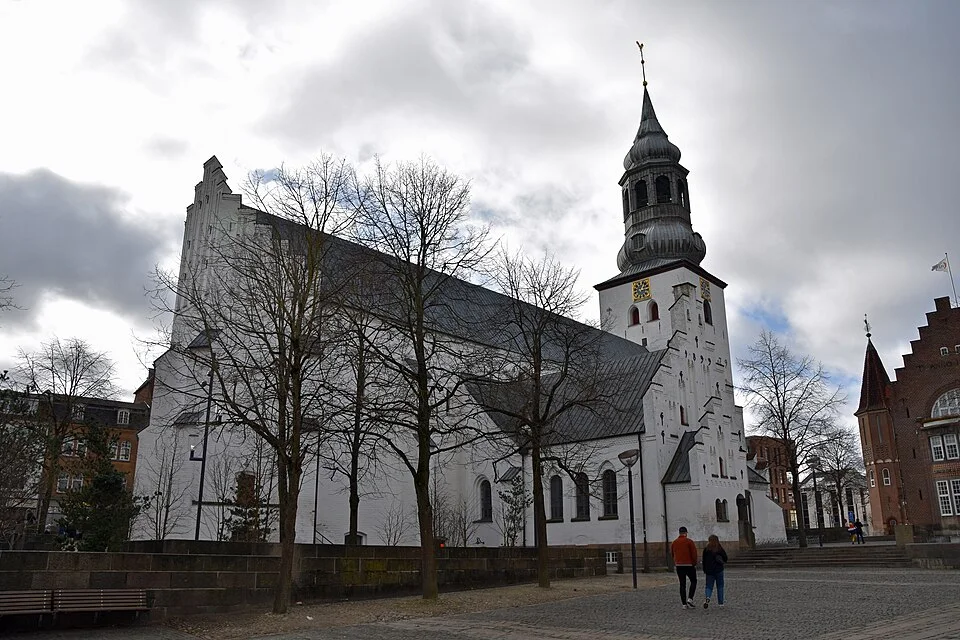
Around Budolfi Cathedral, several layers of Aalborg’s history lie on top of one another. Nordjyske Museer describes churches on this site since the early 11th century. Construction of the Gothic brick church began in the early 15th century, with later extensions.
Look for the pointed windows and view the church from both Algade and Gammeltorv. Slow down here: the church, squares and surrounding streets together tell the story of the medieval town from which today’s city centre grew.
Indoor visits depend on opening hours and church services.
Algade 19 · lift beside SallingApprox. 7–10 min. from the castle
Three metres down – and centuries back in time.
In the middle of the pedestrian street is the entrance to a very different Aalborg. A lift descends three metres below street level to the ruins of a Franciscan monastery founded around 1240. The museum displays masonry, skeletons from the burial grounds and finds from the city’s Viking Age and Middle Ages.
It is a natural continuation of a visit to the castle’s casemates. Both take you beneath the modern city, but tell different stories: fortification and royal administration at the castle, monastic life and the older town beneath Algade.
The museum charges admission and is reached by lift. Check current prices and opening hours with the museum.
From the rhythm of timber framing to sculptural waterfront roofs.
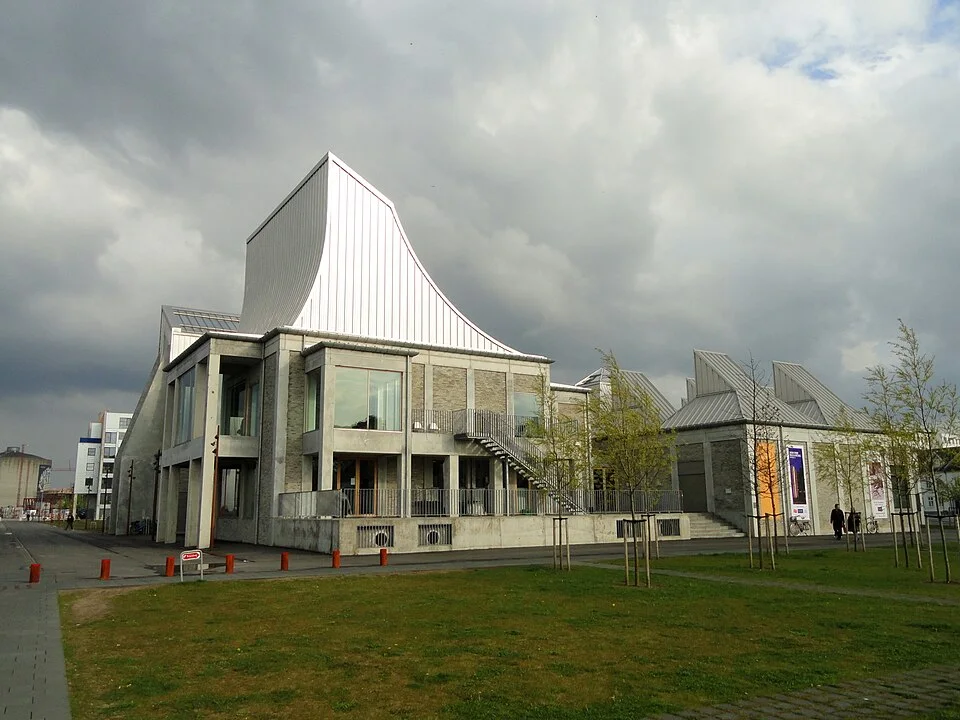
Return towards the fjord and discover the contrast between Aalborghus and the Utzon Center. Designed by Jørn Utzon with his son Kim, the centre was Jørn Utzon’s final work. Its distinctive roofs give the waterfront a very different architectural character from the castle’s enclosed walls.
The walk becomes a conversation between past and present. Enjoy the buildings from the promenade or add an exhibition visit. The centre explores architecture and hosts changing activities, so plan an indoor visit around the current programme.
See current exhibitions, tickets and opening hours on the centre’s website.
Musikkens Plads 1Approx. 10–15 min. from the castle
Finish by the water – or continue into the evening.
Follow the waterfront east to Musikkens Hus. On this final stretch the city opens towards the Limfjord, and the historic centre gives way to modern cultural buildings along the harbour. It is a fitting conclusion after intimate courtyards, old streets and underground remains.
A concert can turn the walk into a full day out. Choose the event and book tickets in advance. Otherwise, let the promenade and the view over the fjord mark the end of your walk, with Aalborghus as the historic place where it all began.
Concerts and other events have their own tickets and schedules.
Short on time? Combine the castle courtyard with Jens Bang’s House and the waterfront. With longer to spare, add a museum visit or a guided tour of the monastery. On a rainy day, museums and exhibitions make inviting stops, provided they are open.
The route follows ordinary streets and promenades. Access inside individual venues varies; contact them for information about steps, lifts or wheelchair access.
The stories draw on the Danish Agency for Culture and Palaces, Nordjyske Museer, Destination NORD and the venues’ own information. Links at each stop lead to sources and current visitor details. This is an independent guide, not an organised guided tour. Some source websites are in Danish.